

Read Up: Sensory Integration

Updated: Apr 12, 2023

I was not familiar with "Sensory Integration Disorder" when the occupational therapist identified it in my son. But it explained a lot ... a lot of my baby's funny behavior and antics, such as laying on his belly and spinning himself in a circle for a minute or two. I had never seen a baby do that before, but thought it was funny and cute, and my son liked to do silly things.
So it was a huge learning curve when the OT said that many of Kieran's antics were sensory seeking. He was trying to get input from his surroundings by spinning his body on the floor, crawling through tight places, and wanting to be tickled and squished. He also HATED touching his food with his hand or getting them messy, was terrified of loud noises in an echo-y space (like, turning on an hand dryer in a public bathroom made my baby scream bloody murder!), and he was afraid of swings.
Also called "Sensory Processing Disorder" or SPD, sensory integration is the way in which our brain processes and integrates inputs from our body's eight sensory systems. For most people, this happens subconsciously, but for others, like my son, the brain has difficulty integrating these inputs, resulting in outward behaviors that indicate distress, discomfort, fear, and anxiety over things in our different environments that stimulate different senses.
To help me understand what my son was experiencing and why, the OT gave me a thick set of handouts from the book Sensibilities: Understanding Sensory Integration by Maryann Colby Trott, M.A., with contributors Marci K. Laurel, M.A., CCC-SLP and Susan L. Windeck, M.S., OTR/L.

Sensibilities: Understanding Sensory Integration was published in 1993, so it's hard to find, but Amazon has copies available, and I highly recommend it!
It isn't light reading, but explains sensory integration in a clear and succinct way. It details the tactile and vestibular systems, giving examples of both, and activity ideas to help your child become desensitized to certain stimuli. The authors give examples using every-day, common items and situations that a child encounters in their daily routines.
The book is written in a hybrid style: part informational, and part workbook for kids to ponder and identify how their bodies respond to different sensory environments and activities.
My pages are filled with red underlines as I marked important ideas and concepts that related to what I observed in my son. Topics covered include:
What is Sensory Integration
The Tactile System
The Vestibular System
Products of Sensory Processes
What Helps Us to Process Sensory Information
Therapy Sessions and School
Dealing with Children's Emotions
Suggestions (Strategies and activities to help kids in daily living)
Since this is the book that my county's Early Intervention program uses, I also use it as my go-to guide for understanding sensory processing and activities to help my son learn to integrate his sensory stimuli.
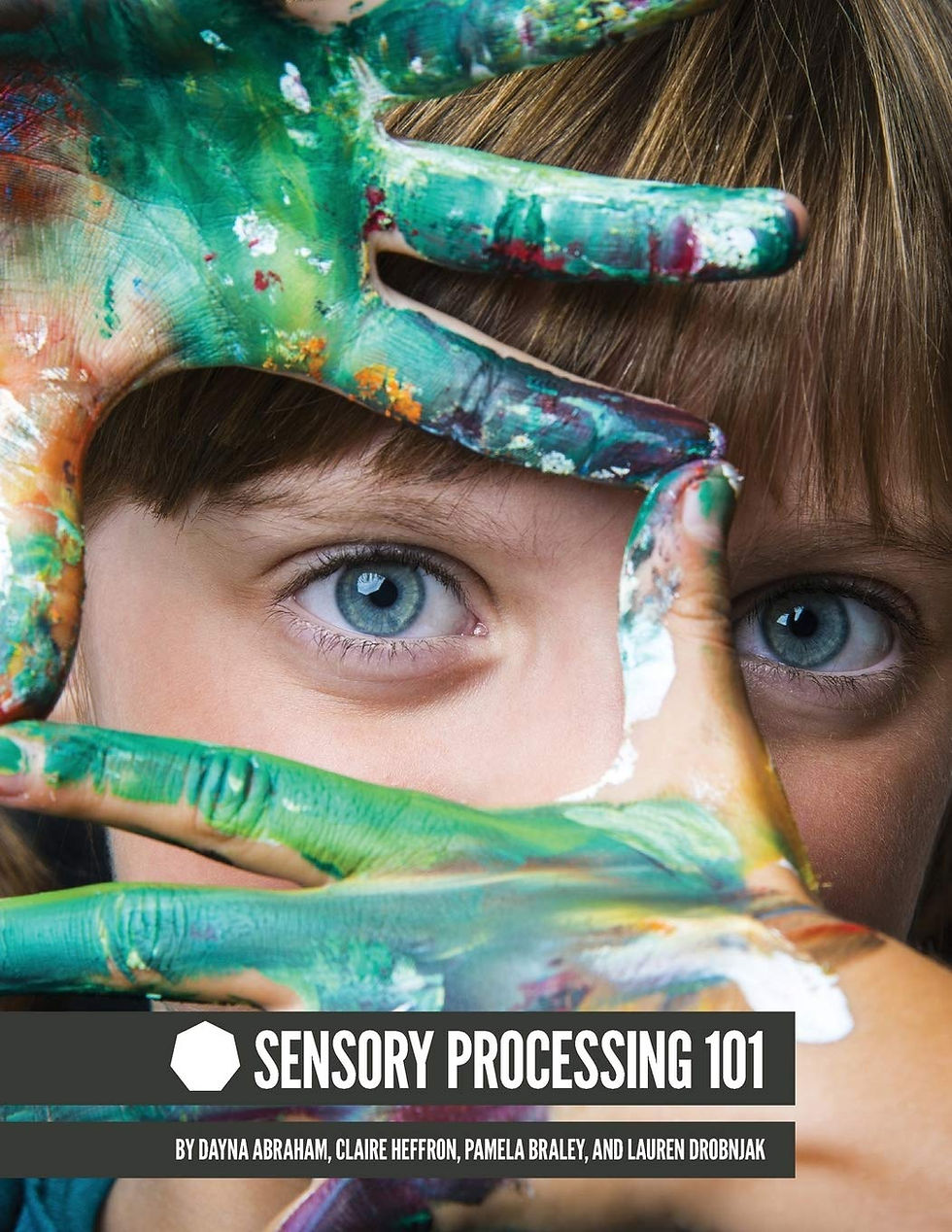
Another book that is helpful for explaining and understanding sensory processing is Sensory Processing 101, by Dayna Abraham; Claire Heffron, pediatric OT; Pamela Braley, pediatric OT; and Lauren Drobnjak, pediatric PT.
This book is intended for a more general audience, addressing both Sensory Processing Disorder (SPD) and overall sensory needs for children to help them grow and develop in a healthy and natural way. It is written in parent- and caregiver-friendly language, and includes helpful guides and resources for support.
Sensory Processing Explained: An explanation of each sensory system from a therapist’s point of view and from the perspective of a parent and educator.
Sensory Activities: Step-by-step instructions for activities you can use in everyday play with kids at home or at school to support the development of each sensory system.
Sensory Resources: Resources related to sensory processing, including support groups for parents and caregivers of children who have sensory needs, cheat sheets with quick overviews of each sensory system, and more.
Whether you are a parent or caregiver of a child with a diagnosed or suspected Sensory Processing Disorder, or just want to understand sensory processing and how to provide an appropriate sensory environment for your child, both of these books have an abundance of information, ideas, tips, guides, and resources to help you in your journey of learning.
** This post is not intended to provide medical or therapeutic information. I am only sharing what I have learned from my son’s therapies for his developmental delays. Please consult with your child’s pediatrician or therapist to learn what is best for your own child’s developmental and medical needs. **
Affiliate links are included in this post, from which we may receive a small commission from purchases.
Comments