

There’s an Alphabet in my Chocolate Pudding!

Updated: Apr 14, 2023
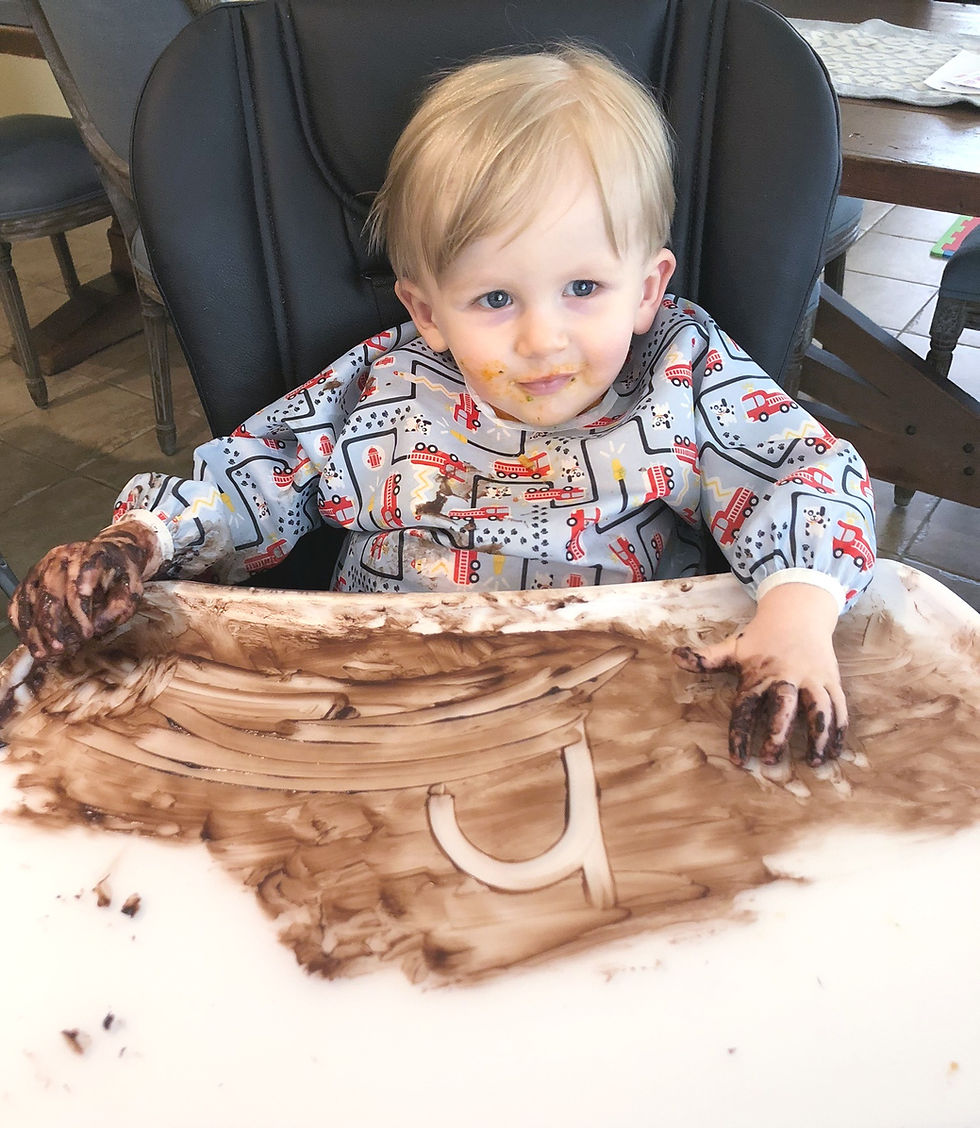
I love finding creative ways to teach kids their alphabet and numbers, and one thing that always gets kids’ attention is chocolate pudding!
Chocolate pudding spread out on a highchair tray or cookie sheet (or similar) makes a perfect background to write letters and numbers on, or even draw pictures.
It gets messy, so be sure to have a coverall bib and some wet wipes handy! Or plan a bath activity after.
I love this activity because fulfills multiple objectives at once!
It provides sensory play with the hands and fingers.
It’s a fun way to teach toddlers the alphabet and numbers.
It reinforces letter recognition by using American Sign Language combined with Zoo-Phonics® animal characters.
It also supports feeding therapy and developing self-feeding skills by promoting the connection between tactile sensory stimulation and oral sensory stimulation.
So many awesome things in this one activity! (And who doesn't love to lick chocolate pudding off their fingers!)
You only need two items for this activity:
Chocolate pudding (like this value pack.)
A tray of some sort (I love these non-slip silicon placemats).
For babies and toddlers, this is a perfect highchair activity.
I also recommend these Bumkins coverall bibs to protect the toddler's clothing (find a larger size for kids 3-5 years here), and wet wipes for a quick clean up.
Watch me teach the letter "K"
I chose to do this activity with Kieran because it met objectives for both his occupational therapy and feeding therapy goals: get his hands messy and lick his fingers!
Due to Kieran’s sensory integration delays, he had a strong aversion to getting his hands and fingers messy. He did not like to touch different textures, and he refused to lick food off his fingers. Instead, he would just get anxious and agitated when something was on his finger, and wave his hands around to get me to wipe it off. Kieran also had delayed fine motor skills, such as a weak pincer grasp and holding a spoon.
One objective of his occupational therapy was to engage Kieran in sensory play with his hands and fingers to help him learn to tolerate textures (sensory) and improve his finger dexterity. This chocolate pudding activity checked those boxes.
But… did you know that sensory food play with fingers is also an important part of learning to eat? What?? Yes! That was one of the many interesting things I’ve learned from helping Kieran at his feeding therapy sessions. There is actually a biological and physiological reason why babies learn to eat first with their fingers: learning to touch and tolerate food textures with the fingers translates into accepting food textures in the mouth! It was a bit mind blowing to learn that! I had no idea…
Let your baby get her hands messy when she eats, because it is also teaching her how to eat with her mouth!
We have more about this in our Feeding Therapy section, but food sensory play was also important for Kieran’s feeding therapy because it was one method to help him adapt to tolerating textures in his mouth and reduce his gag reflex. At Kieran’s first few feeding therapy sessions, the therapist used yogurt and whipped cream, as well as pudding, to engage Kieran in sensory finger play, encouraging him to play with his food before she worked on tolerating textures in his mouth. So, this chocolate pudding activity checked those boxes, too!
I am also a big advocate for teaching babies and children sign language (American Sign Language or ASL.) I will include other posts about ASL, but I have found that toddlers learn to speak and communicate earlier when they have learned sign language as babies, which is a theory shared by many.
Finally, I am a huge advocate for reading to children, starting when they are babies, and have taught many kids to read before the age of five. Using my own experimentation to find effecting teaching tools, I discovered that kids responded well to combining the Zoo-Phonics program ― which uses animal character names and actions to teach the audio sounds of letters ― with ASL as a visual reminder.
Audio + visual is a highly effective means of teaching children to read, so I like to introduce these concepts when children are babies, in that critical 0-3 age range. This chocolate pudding activity provides an ideal setting to do this!
Writing the alphabet in chocolate pudding is a simple, yet powerful activity because it is easy to do, checks alllllll the developmental boxes, and is finger-licking fun!

*Affiliate links are included in this post, from which we may receive a small commission from purchases.


Comments